Before There
Was Before
A new book by Namkha Drimé Rinpoche · In bookstores 18 November 2065
Projection, forgetting and the birth of a point of view — the first book in English from the tenth incarnation of one of the earliest lamas of Tibet.
༄༅
“Projection itself
was forgetting.”
From the opening chapter
Before ThereWas Before
Namkha Drimé Rinpoche
The book
A creation story that ends with a heartbeat.
Before space, before sequence, before anything had been forced to become one thing instead of another, there was completeness. It did not act. It projected — and every projection loses something on the way.
In this quiet, astonishing book, Namkha Drimé Rinpoche follows that loss all the way down: through broken symmetries and cooling planets, through the first membranes and nervous systems, to the moment a network folds back on itself deeply enough to have an interior. What we call consciousness, he suggests, is not something the brain manufactures. It is what completeness feels like when forced into a small, self-referring shape — and forgetting is not a flaw of that shape, but the price of having a point of view at all.
Part cosmology, part neuroscience, part meditation manual, it reads like scripture written by someone who has also read the equations.
288 pages
Hardcover, e-book & audio read by the author
32 languages
Published worldwide on the same day
18.11.2065
Snowline Press · in bookstores
Seven movements
From completeness
to a point of view.
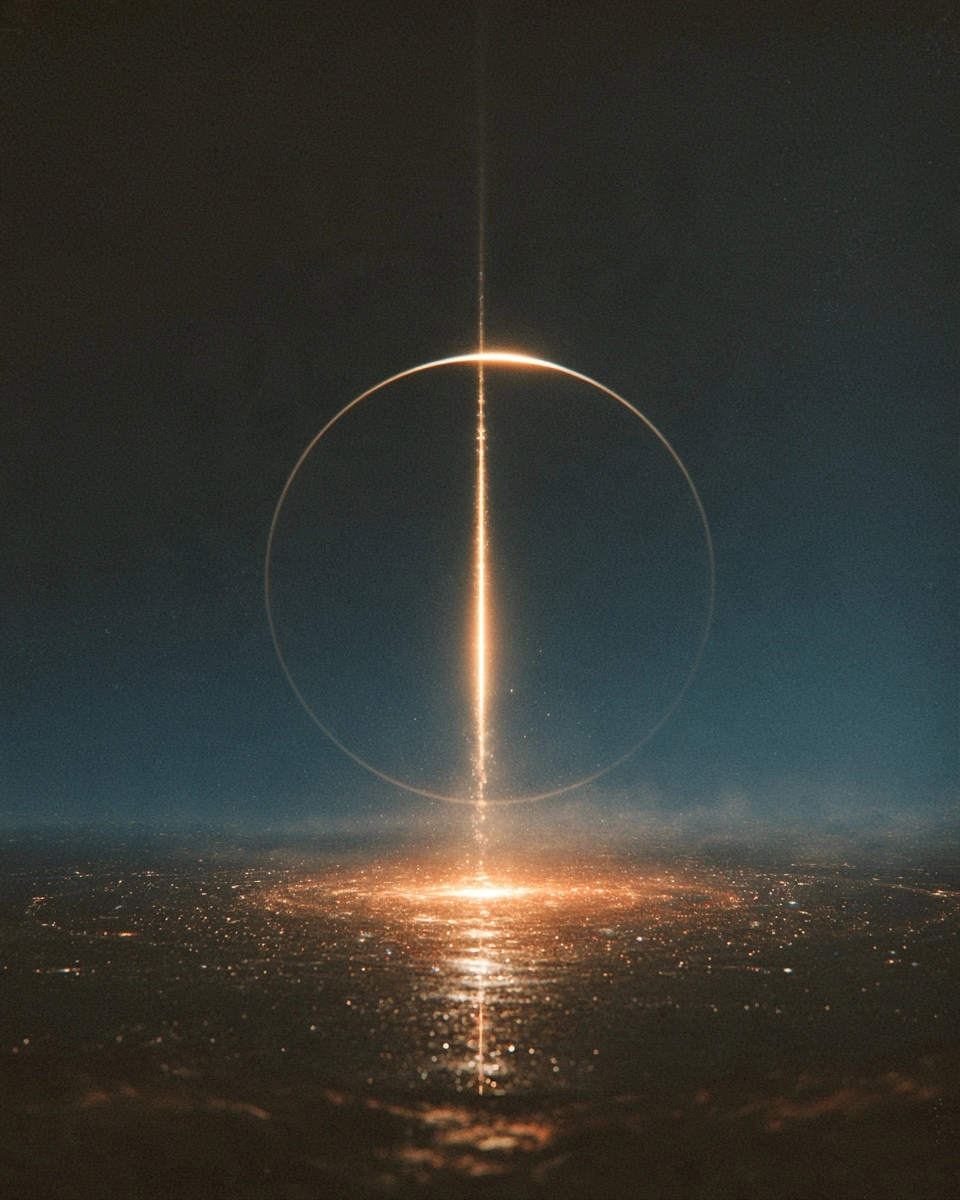
I
Completeness
“Nothing had yet been forced to become one thing instead of another.”
II
Projection
“No projection could preserve the whole. In what was lost, universes became possible.”
III
The Shadow
“A shadow could contain no instrument capable of turning around to inspect what cast it.”
IV
The Fold
“That condition had an interior. From the interior, it felt like something.”
V
Forgetting
“There had been no memory to lose. Projection itself was forgetting.”
VI
Translations
“The absence of locality became flight. The absence of separation became warmth or embrace.”
VII
A Point of View
“For the first time, the incomplete universe acquired a point of view from which to experience its own incompleteness.”
Read the opening · Chapter One
Before time
Before time, there was no before. There was no space in which anything might be located, and no sequence through which one condition could become another. There were no events, because an event required alternatives to disappear, and nothing disappeared. Every state that could be existed without displacing any other.
To call this a field would later be convenient, although the word was wrong. Fields belonged to universes. They extended across dimensions, varied from place to place, and possessed values that could be measured. This had neither position nor extension. It was not everywhere, because everywhere was a property of space, and space had not yet been projected. Nor was it conscious, at least not in any sense that would later be recognized as consciousness. Consciousness required perspective, and perspective required limitation. There was none.
What existed was closer to completeness: not an infinite collection of possibilities, but a condition in which the distinction between possibility and actuality had never arisen. Contradictory states required no reconciliation because contradiction itself depended upon exclusion. Nothing had yet been forced to become one thing instead of another.
Completeness, however, possessed a peculiar property. It projected.
There was no intention behind this. Projection was no more an action than gravity would later be an action. It was simply part of the structure of what was. From something that possessed no ordinary dimension arose structures with fewer degrees of freedom than their source, and those structures were incomplete by necessity. No projection could preserve the whole.
In what was lost, universes became possible.
༄༅
The rest of the story continues on 18 November 2065.
Translations
The marsh was never
a marsh. The river was
never a river.
In meditation, lucid dreams and the edges of sleep and death, people describe light, flight, rivers and marshes. The book reads them not as places, but as a nervous system’s best translations of something it has no categories for.

No external source
Light everywhere at once
Not light from a lamp or a sun, but luminosity that surrounds, penetrates, embraces — and feels like recognition.
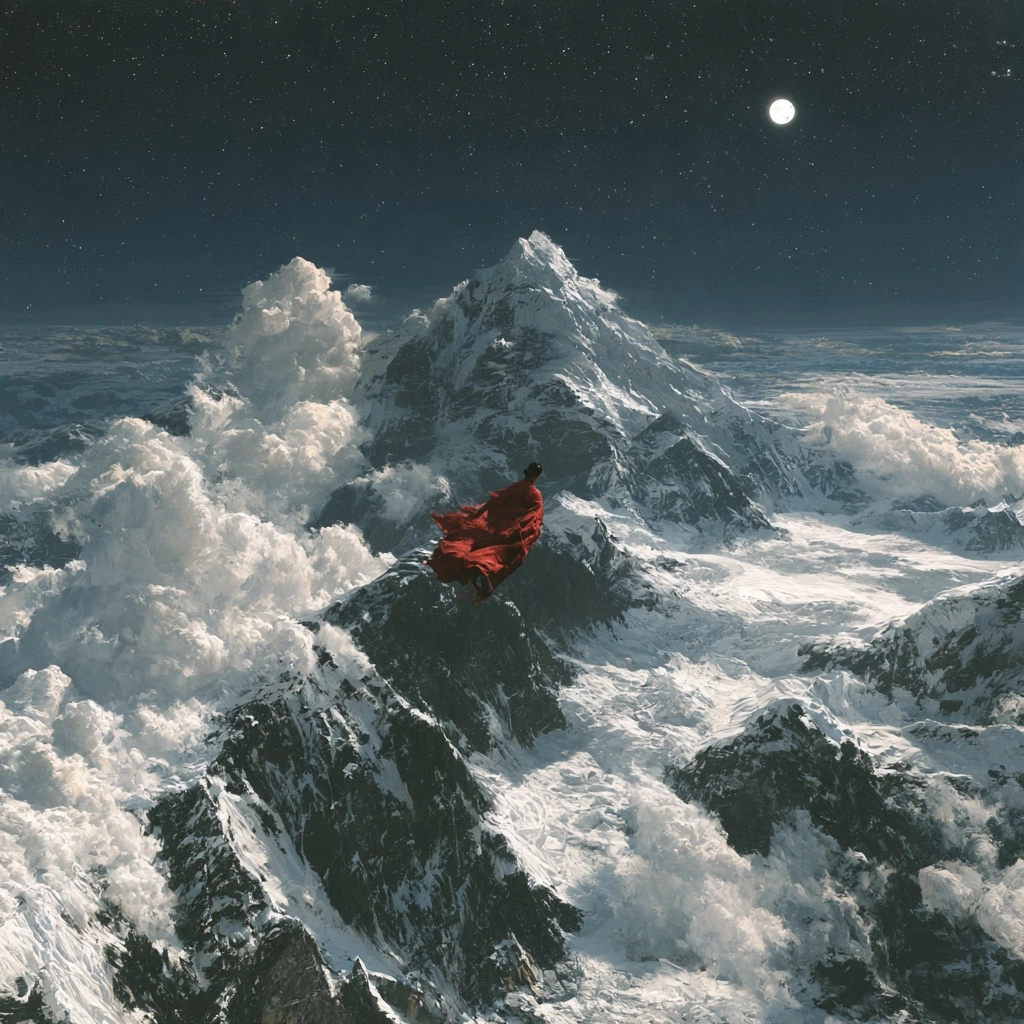
No locality
Flight
In lucid dreams the body rises without effort. What stays after waking is not exhilaration, but relief: weightlessness felt familiar.
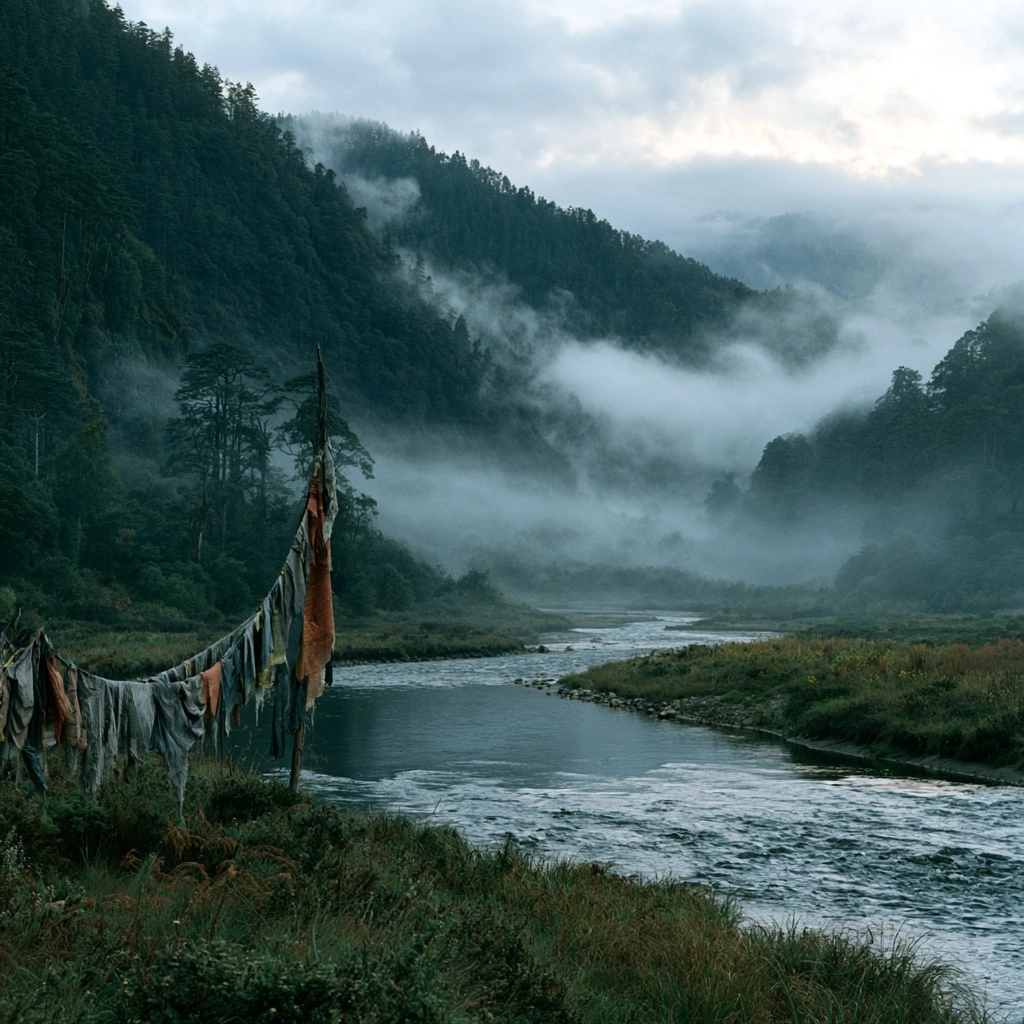
No sequence
The river
Near sleep, fever and death, a river appears. It is the oldest image we have for a transition we cannot otherwise picture.

No structure
The marsh
Resistance and sinking: the nervous system’s attempt to depict the loss of structure using structures it already has.

The author
Namkha Drimé Rinpoche
the tenth Stainless Sky
Recognised at the age of four as the tenth incarnation of Lama Namkha Drimé — “Stainless Sky” — an eighth-century teacher of the Yarlung valley remembered as one of the first lamas of Tibet, he spent twenty years in the debate courtyard before surprising his teachers with a doctorate in theoretical physics.
For three decades he has taught where contemplation meets measurement: to monks about quantum fields, to physicists about attention. He lives in a small hermitage above Dharamsala, writes by hand, and still answers his letters. Before There Was Before is his first book written in English.
“I did not write about where we come from. I wrote about why we cannot remember it.”
Launch evenings · November–December 2065
Seven cities,
one conversation.
18 Nov
Kathmandu
Release day · reading and evening meditation at Boudhanath
21 Nov
Dharamsala
A morning of debate with the monastery’s young monks
26 Nov
Zürich
In conversation with a panel of physicists — “What survives the projection?”
29 Nov
London
Reading and signing
3 Dec
New York
Neuroscience and the interior — a public dialogue
7 Dec
Tokyo
Reading with live Japanese translation
11 Dec
São Paulo
Closing evening · lucid dreaming and the self
Venues and tickets are announced one month before each evening.
There was warmth and pressure. There was no word for either.
Beyond the new boundary, impossibly close, another heart was beating.
Pre-order
In bookstores 18 November 2065
Hardcover
€34
288 pages, cloth-bound, gold-foil cover
Audiobook
€24
Read by the author · 9 h 40 min
E-book
€18
In 32 languages on release day
Ask for it at your local bookstore, or pre-order wherever books are sold.