Soho Manufactory · Handsworth, near Birmingham · Anno 1786
Power, made to order.
We design, cast, bore, erect and keep in good order the improved steam engines of Mr Watt’s patent — for mines, mills, breweries, ironworks and every manufactory that will no longer wait upon the wind or the river.
The Beginning of a New Age
A mill once went where the water was. Now the power comes to the mill.
For seventy years the old atmospheric fire-engine of Mr Newcomen has laboured at the pit-head, swallowing coal by the waggon-load and good for nothing but lifting water. Every manufactory that wanted motion was chained to a stream, a weir and a dry summer.
Mr Watt’s improvements change the bargain. By condensing the steam in a separate vessel, the cylinder is kept always as hot as the steam that enters it, and a great part of the coal is saved. By the sun-and-planet wheels, the engine turns a shaft as smoothly as any water-wheel. Henceforth a mill may stand in a town, beside the canal and the coal, and run by night as well as by day.
We believe it the beginning of an age in which the strength of a nation is measured by its engines.
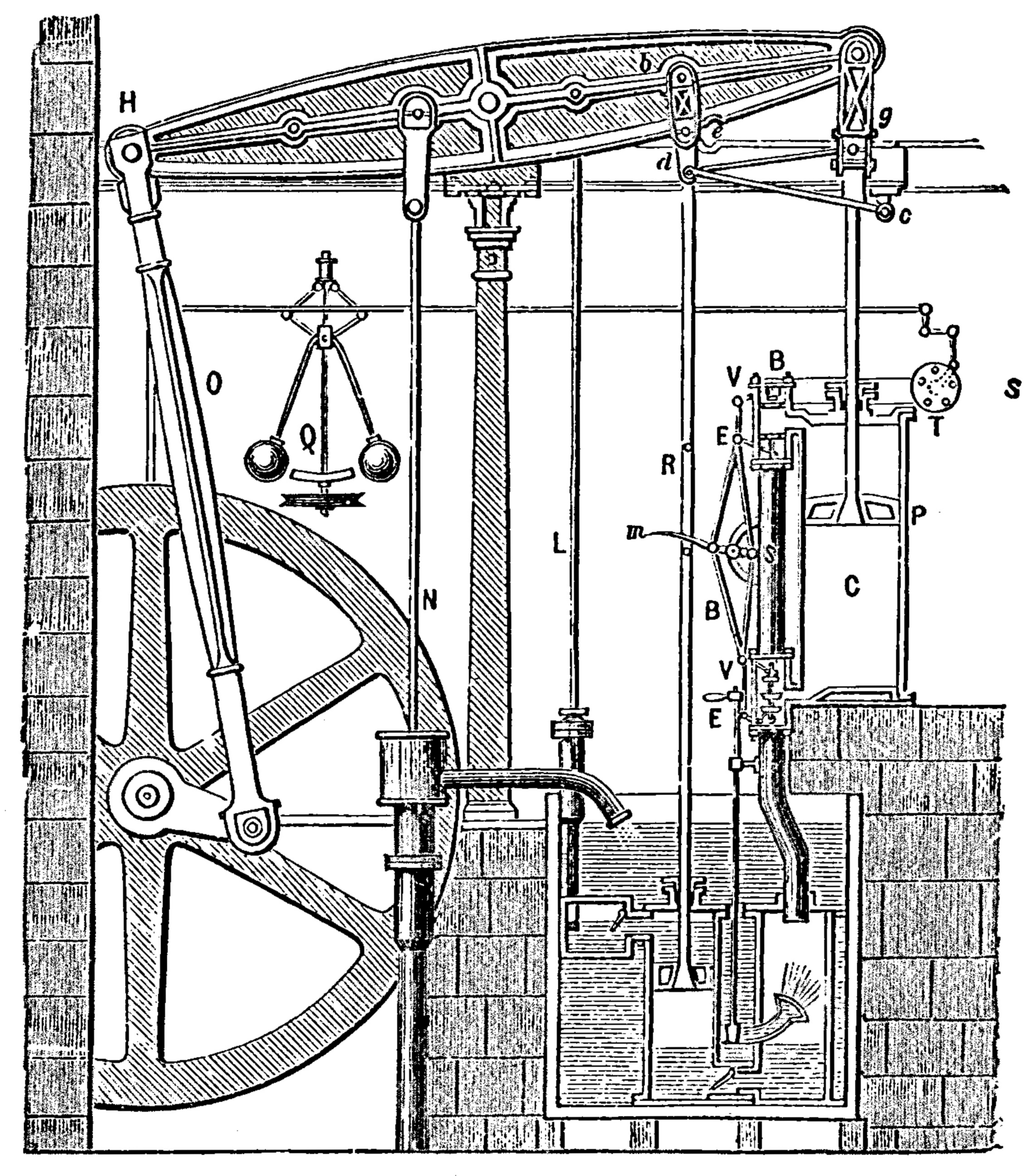
Our rotative engine of 1784, with sun-and-planet wheels and parallel motion. Engraving after R. H. Thurston.
- 1765On a Sunday walk across Glasgow Green, Mr Watt conceives the separate condenser.
- 1769Patent granted for a new method of lessening the consumption of steam and fuel in fire-engines.
- 1774Mr Watt removes to Birmingham. His engine is set up again and made to work at Soho.
- 1775Boulton & Watt is formed; Parliament extends the patent to the year 1800.
- 1776Our first engines at work: Bloomfield Colliery, Tipton, and Mr Wilkinson’s blast furnace at New Willey.
- 1778Into Cornwall. Engines for the copper and tin mines, beginning at Wheal Busy.
- 1781Sun-and-planet motion patented. The engine now turns a wheel as well as lifts water.
- 1782The double-acting engine and expansive working: steam pushes on both sides of the piston.
- 1784Parallel motion guides the piston rod straight and true without chains.
- 1786The Albion Mills, London: two engines of fifty horses grind corn for the metropolis.
The Partners
A Scotch philosopher and a Birmingham manufacturer.
One of us can make an engine think; the other can make a hundred of them and see them paid for. Between us there is nothing in the business of power that we cannot undertake.
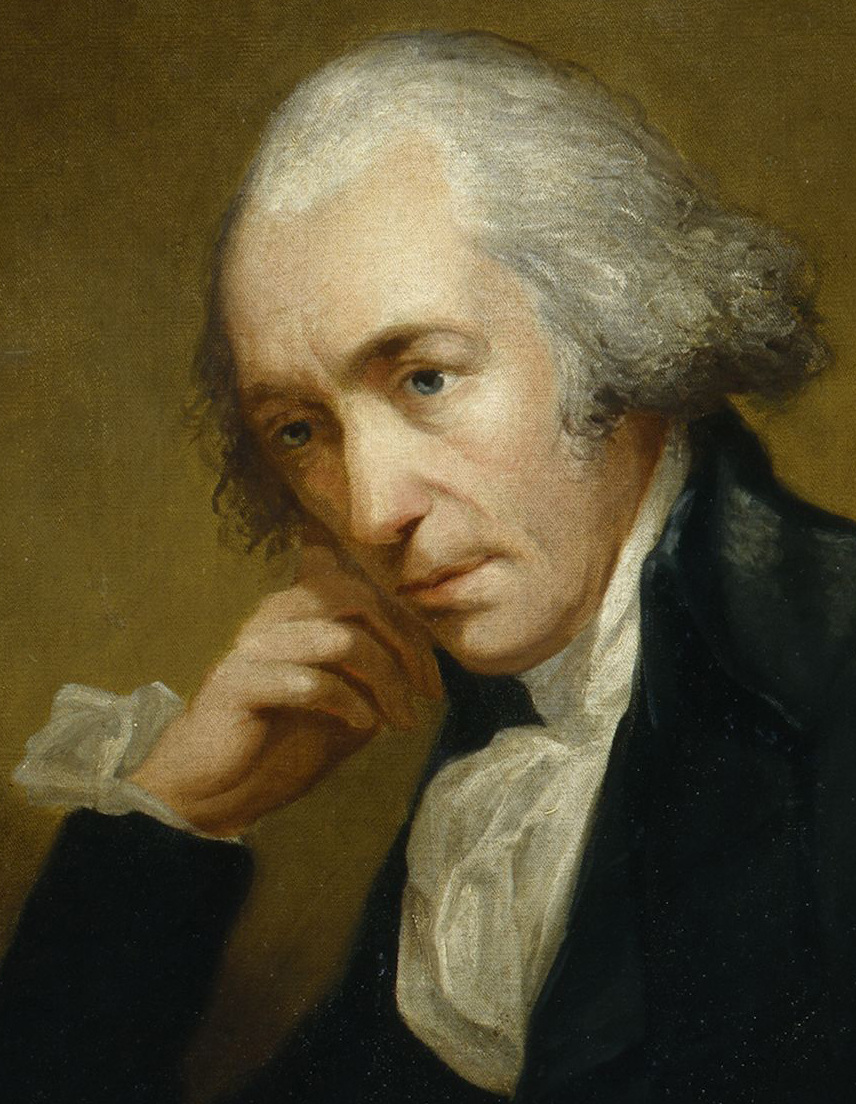
The Inventor
James Watt
Born at Greenock, 1736
Instrument maker to the University of Glasgow, surveyor of canals and natural philosopher. Inventor of the separate condenser, the sun-and-planet motion, the double-acting engine and the parallel motion; also of the copying press on which our letters are duplicated. Mr Watt designs every engine that leaves Soho and answers every difficult question about it.
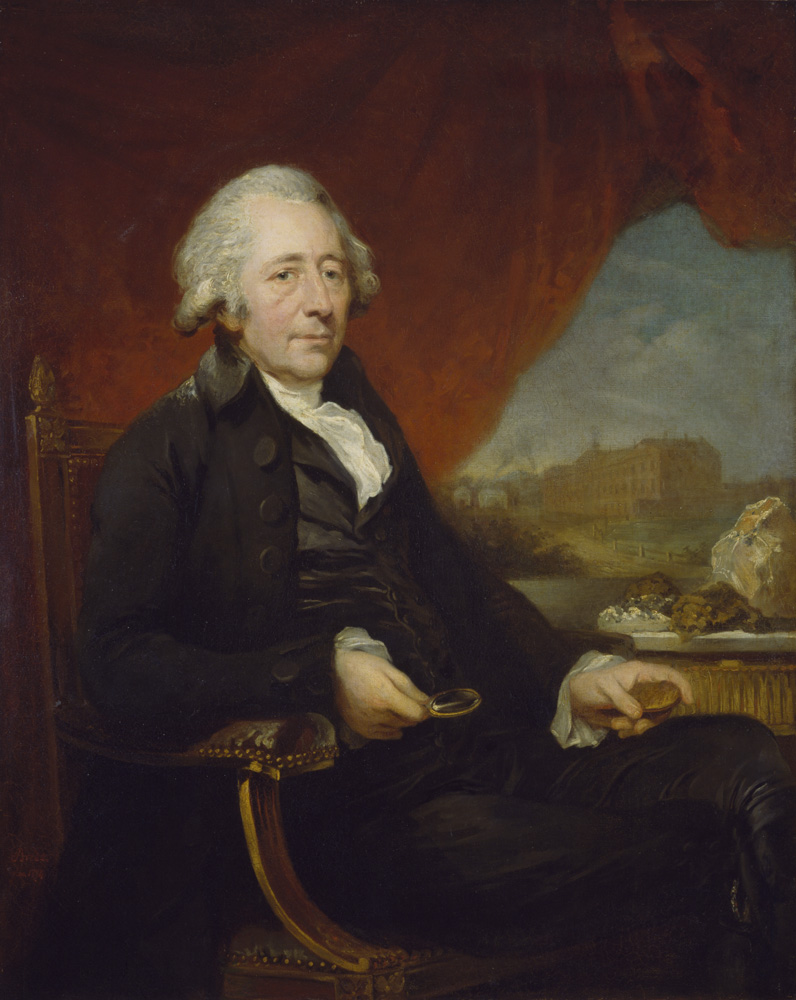
The Manufacturer
Matthew Boulton
Born at Birmingham, 1728
Proprietor of the Soho Manufactory, where some six hundred hands make buttons, buckles, plate and ormolu. It was Mr Boulton who brought Mr Watt to Birmingham, secured the patent before Parliament and set the engine trade on a sound commercial footing. Gentlemen visiting Soho will find him glad to show them round.
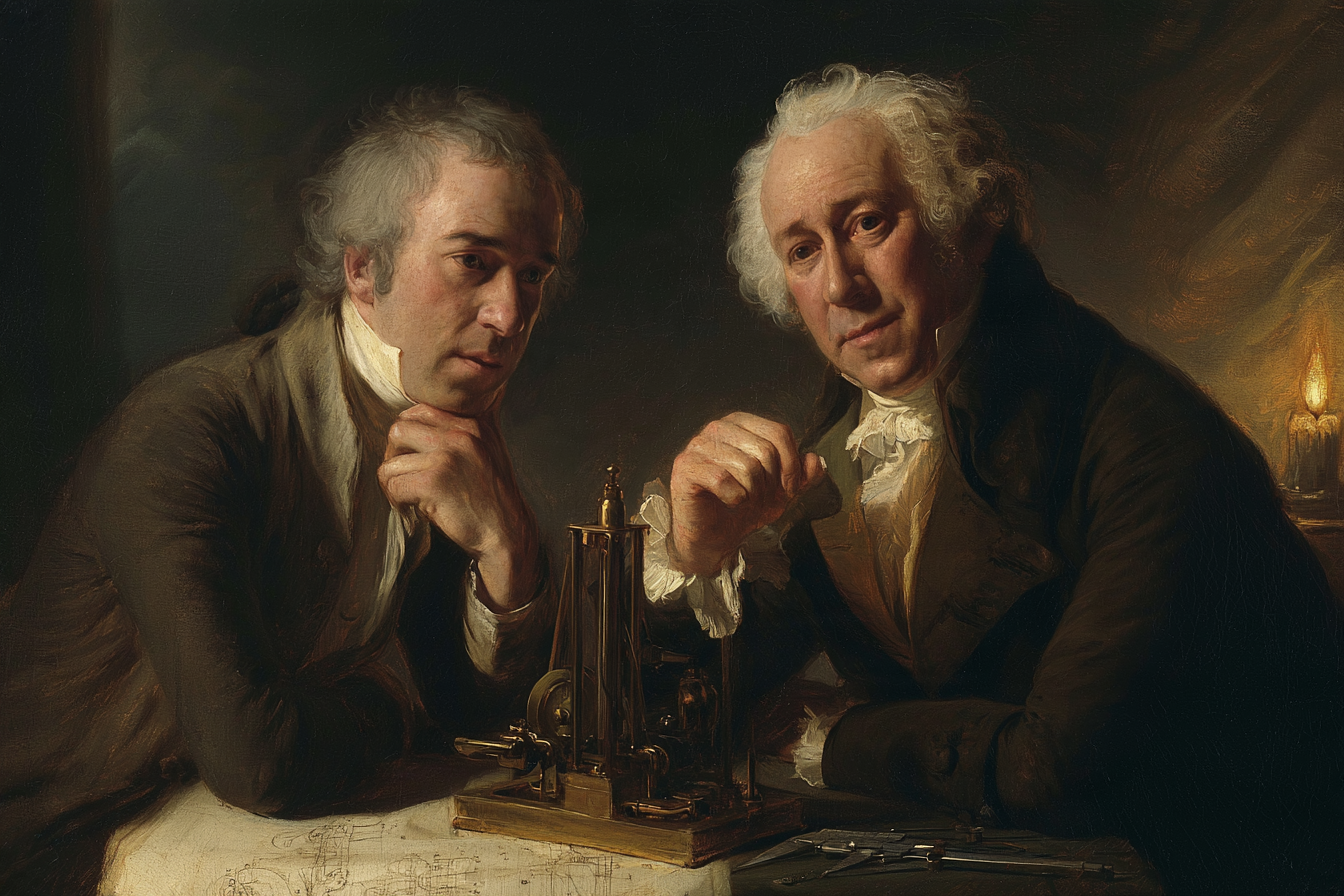
“I sell here, Sir, what all the world desires to have — Power.”
Mr Boulton to Mr Boswell, on his visit to Soho, 1776
From First Survey to the Last Stroke
One firm. The whole engine.
Other men will sell you a cylinder, or a boiler, or a drawing. We undertake the entire business — and stand behind it for as long as the engine works.
I
Design
Our engineer surveys your pit, mill or brewhouse, reckons the work to be done and the coal to be saved, and draws the engine and its house to fit.
- Survey of site & water
- Reckoning of horses required
- Drawings of engine-house
II
Manufacture
Cylinders cast and bored true by Mr Wilkinson at Bersham; valves, nozzles and working gear made and fitted by our own hands at Soho.
- Cylinders bored to a nicety
- Brass valves & nozzles
- Parallel motion & gearing
III
Erection
Our erectors travel to you with the parts, raise the cylinder, hang the beam, set the valves, and do not leave until the engine goes sweetly.
- Erectors sent anywhere
- Engine-house superintended
- Trial under full load
IV
Keeping
We train your engine-keeper, inspect the engine yearly and supply every part that wears. You pay a premium of one-third the coals saved.
- Engine-keepers trained
- Yearly inspection
- Spare parts by return
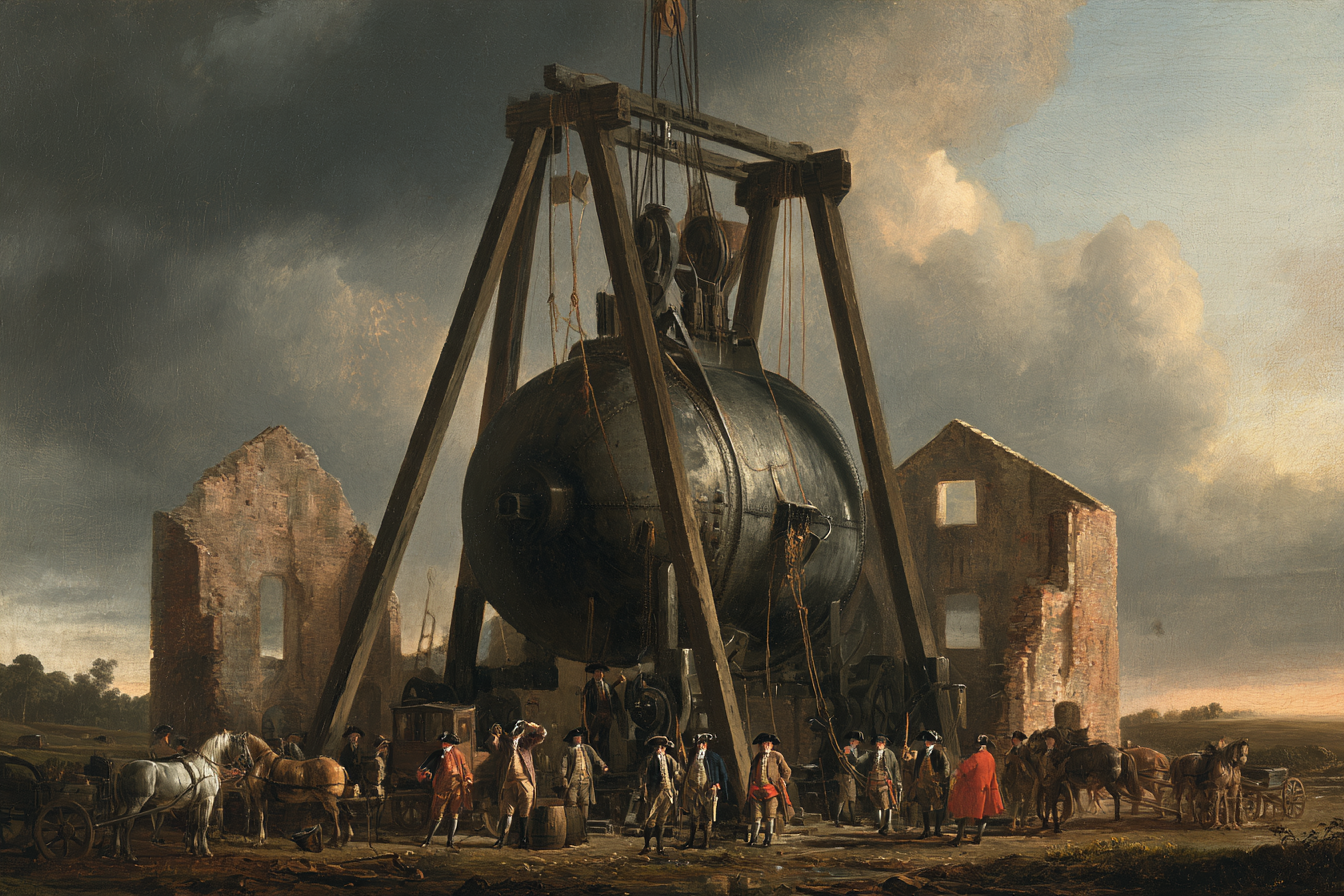
Our Erectors
We do not send a crate. We send a man.
An engine is only as good as its erection. Our erectors are bred at Soho, know every part by its first name and will raise a forty-ton beam with nothing but sheer legs, tackle and a dozen of your labourers. Mr Murdoch himself has kept our Cornish engines going through many a winter at Redruth.
Should your engine fall sick at any hour, a letter to Soho brings a man on the next coach. Customers in Cornwall and the North are attended by erectors stationed there.
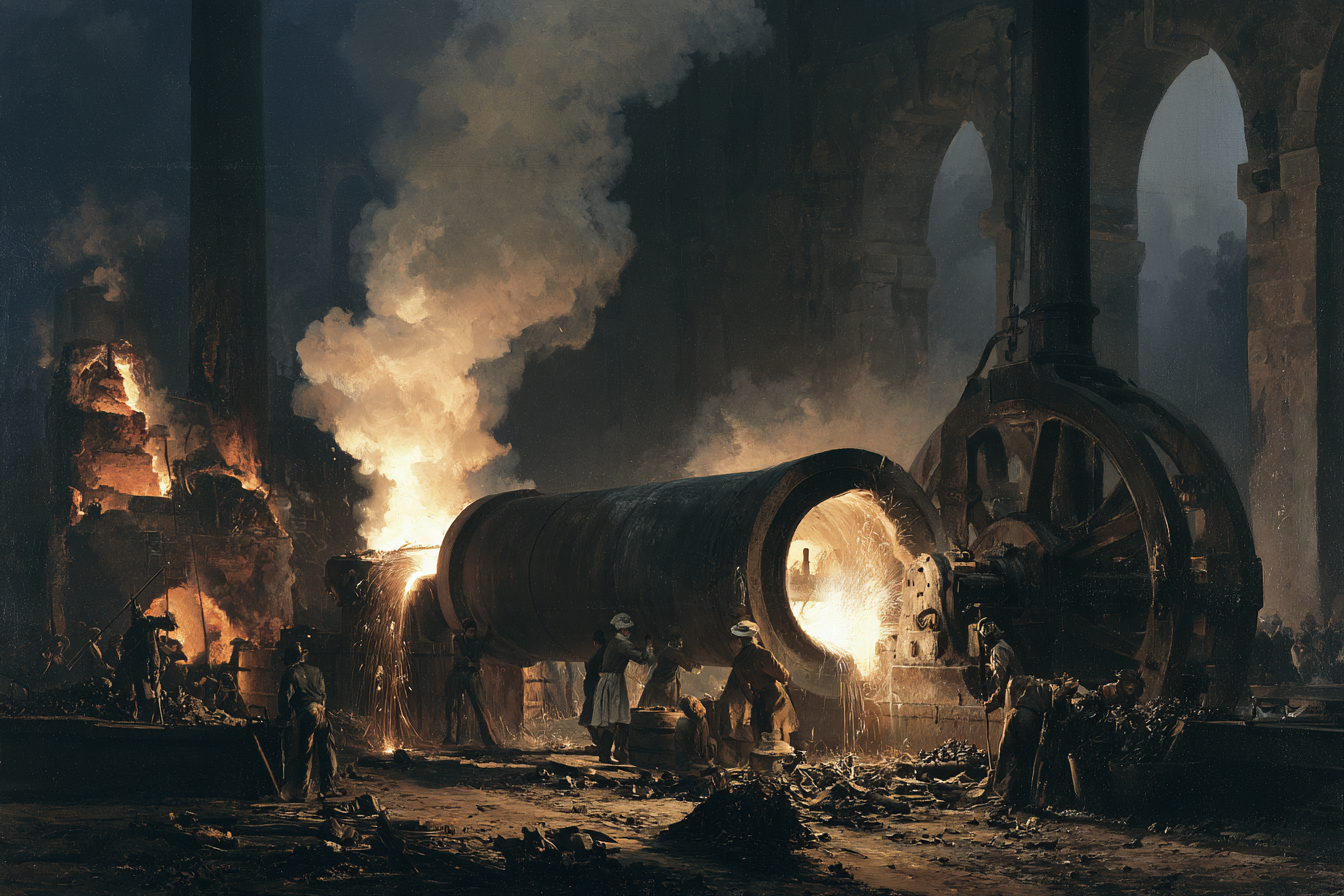
Bored True
Cylinders that do not err the thickness of an old shilling.
The secret of an economical engine is a piston that fits its cylinder. Common foundries leave a gap one may put a finger in, and stuff it with hemp. Our cylinders are bored at Mr John Wilkinson’s ironworks on his new boring mill, which holds the cutter steady on a bar running clean through the casting.
The result is steam kept where it belongs — and coal kept in your yard.
A Tariff of Engines
Six engines for six trades. Every one made to measure.
No two pits and no two mills are alike, so no two of our engines are quite alike either. These are the patterns we build most often, with the prices at which we have lately erected them. Your own engine will be reckoned exactly after our survey.
For Mines
The Cornish
A single-acting pumping engine of the largest size, for drowned copper and tin mines where the old engines can no longer keep the water down.
- Cylinder58 inches
- Powerabout 40 horses
- Lifts waterfrom 80 fathoms
- Strokes11 a minute
For Breweries
The Brewer
A compact rotative engine with sun-and-planet wheels to grind malt, pump liquor and stir the mash, as at Mr Whitbread’s great brewhouse.
- Cylinder24 inches
- Power10 horses
- Drivesmalt mill & pumps
- Fly-wheel14 feet
For Cotton Mills
The Spinner
A double-acting rotative engine with parallel motion and a heavy fly-wheel, for a steady, even motion to spinning frames and mules.
- Cylinder30 inches
- Power20 horses
- Drivesabout 4,000 spindles
- Strokes22 a minute
For Corn Mills
The Albion
A pair of double-acting engines on the plan of the Albion Mills at Blackfriars, grinding day and night for a city’s bread.
- Cylinders2 × 34 inches
- Power2 × 50 horses
- Drives20 pairs of millstones
- Grinds150 bushels an hour
For Ironworks
The Ironmaster
A blowing engine to give the blast furnace a strong and constant wind, with a rotative side to work the forge hammer and rolling mill.
- Blowing cylinder72 inches
- Powerabout 40 horses
- Worksfurnace, hammer & rolls
- Blastday & night
For Small Manufactories
The Soho Small
Our smallest rotative engine, for button makers, potters, snuff and paint mills, polishers and grinders — any master tired of feeding horses.
- Cylinder14 inches
- Power4 horses
- Replacesabout 10 mill horses
- Spacea room of 20 feet
Additions & Sundries
| Item | Price |
|---|---|
| Survey of your site and reckoning of the work, by our engineer (remitted upon order) | 10 guineas |
| Drawings for the engine-house, boiler-house and chimney | 15 guineas |
| Conversion of a common fire-engine: separate condenser and air-pump fitted | from £450 |
| Parallel motion fitted to an engine already at work | £140 |
| Wrought-iron waggon boiler for an engine of 20 horses | £260 |
| Yearly inspection and keeping contract | £30 a year |
| Engine-keeper trained six weeks at Soho | 8 guineas |
| Premium on pumping engines: one-third of the coals saved against a common engine | yearly |
| Premium on rotative engines, in lieu of the above | £5 per horse a year |
A guinea is one pound and one shilling. Prices are for engines erected within a hundred miles of Soho; carriage beyond that at cost.
The Reckoner of Savings
Set your engine as you would work it, and see what the separate condenser puts back in your purse each year.
Reckoned on 300 working days, 25 lb of coals per horse an hour for a common engine and one-third of that for ours.
Engines at Work
From the cliffs of Cornwall to the banks of the Thames.
Since our first two engines went to work in 1776 — at Bloomfield Colliery and at Mr Wilkinson’s furnace at New Willey — our engines have been raised in pits, mills and brewhouses across the kingdom. A few of them:

Wheal Busy, Cornwall · 1778
The Copper Mines
Our first engine in Cornwall, where coal comes dear by sea and the saving in fuel is felt the most. The adventurers now pay us their premium gladly.
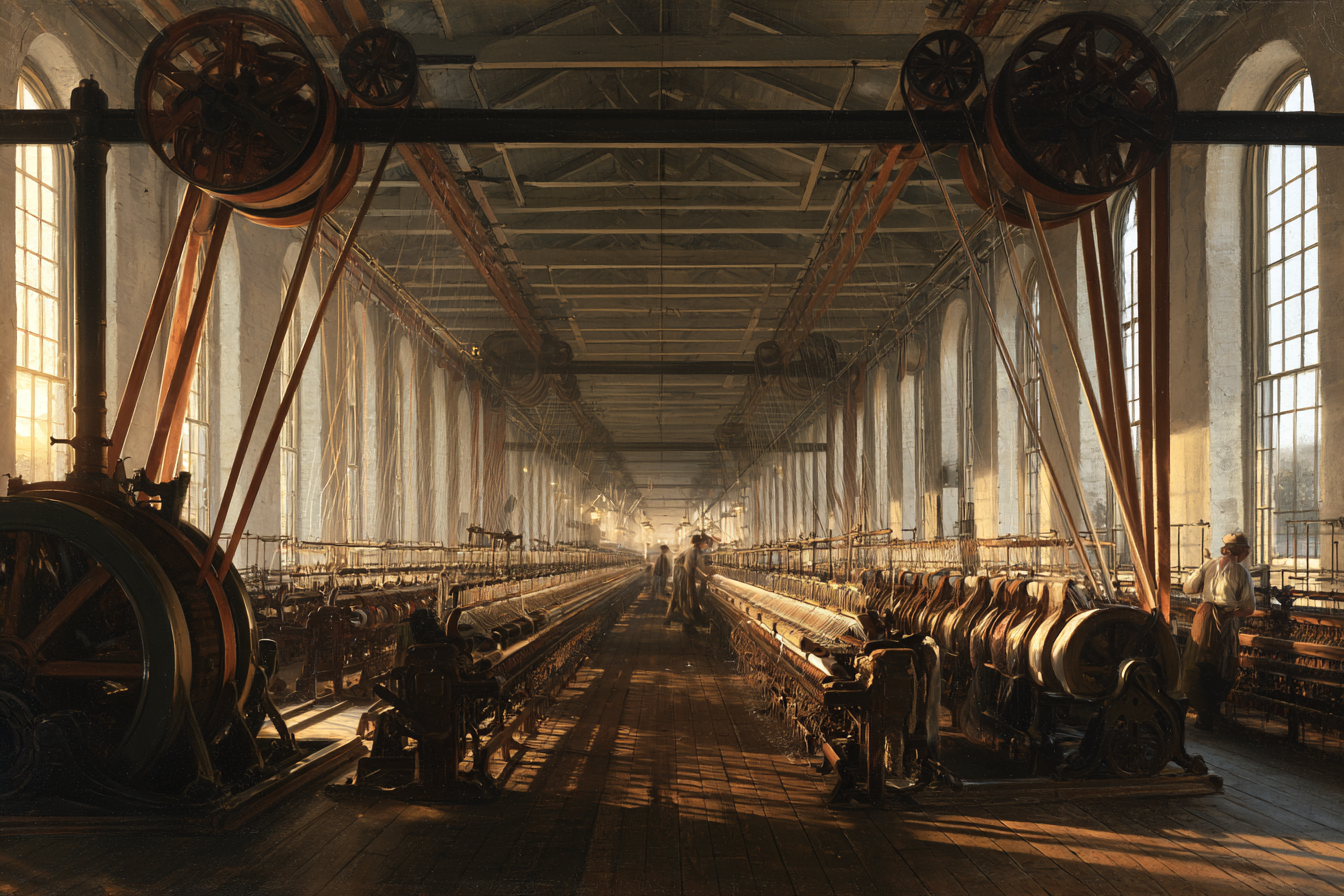
Papplewick, Notts. · 1785
Mr Robinson’s Cotton Mill
The first cotton mill in the kingdom to spin by one of our engines, pumping no water back over a wheel but turning the mill direct.
Chiswell Street, London · 1785
Mr Whitbread’s Brewhouse
A rotative engine of sun-and-planet motion grinds the malt and pumps the liquor where once a whole stable of horses walked in a ring.
Blackfriars, London · 1786
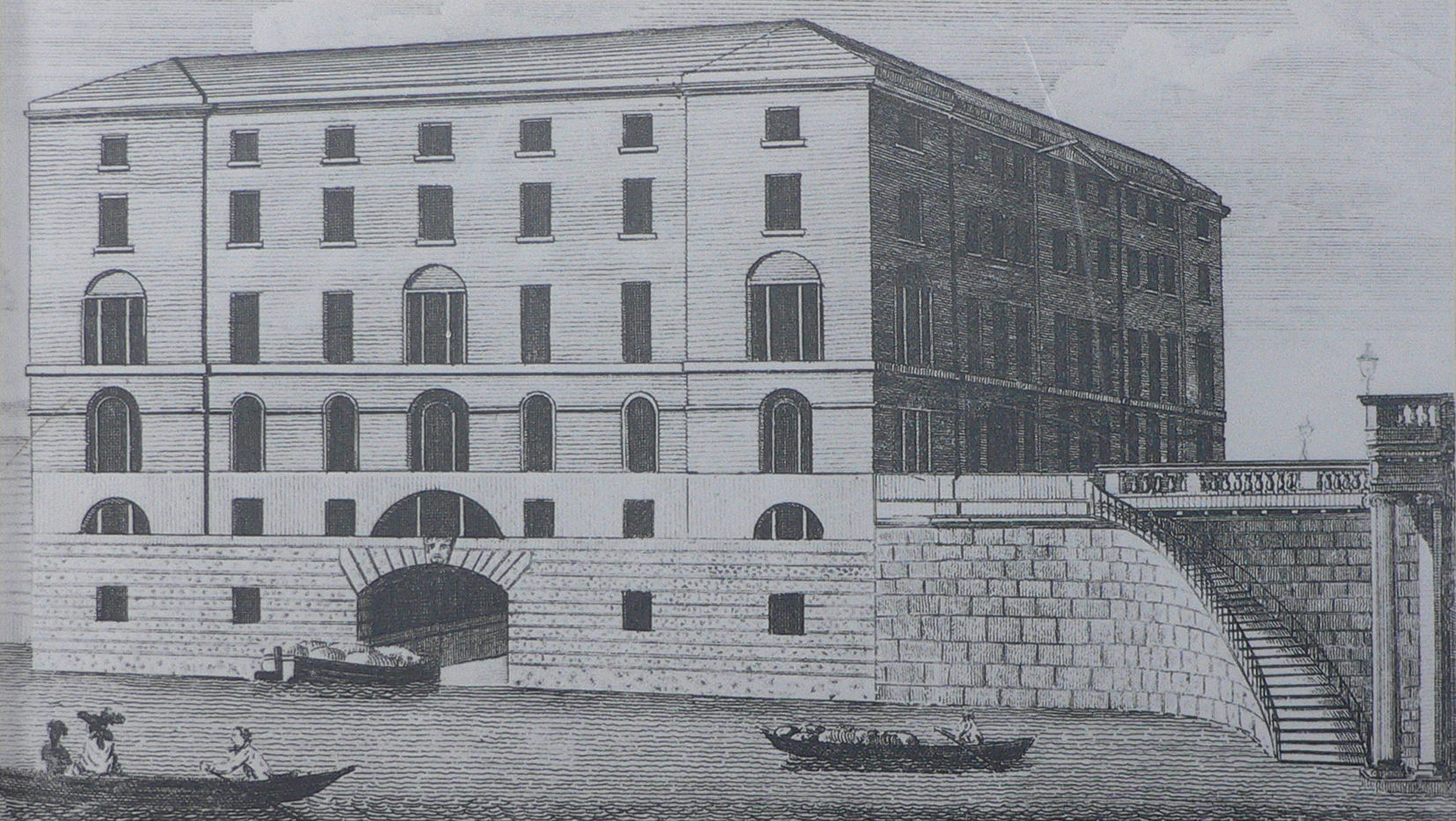
The Albion Mills
Two engines of fifty horses each, grinding corn for the metropolis by day and night. Visitors of quality come by the boat-load to see them.
The sun-and-planet wheels at work: the planet wheel, fixed to the connecting rod, carries the sun wheel and fly-wheel round twice for every stroke of the engine.
Mr Watt’s Improvements
Six reasons our engines burn a third of the coals.
- The separate condenserSteam is condensed in a vessel apart from the cylinder, which is kept always hot within its steam jacket. The great part of the coal is saved. Patent of 1769.
- Sun-and-planet motionA wheel fixed to the connecting rod runs round a wheel on the fly-wheel shaft, turning it twice for every stroke. The engine turns mills directly. Patent of 1781.
- The double-acting engineSteam is admitted above and below the piston in turn, so the engine pushes as well as pulls and does twice the work in the same cylinder. Patent of 1782.
- Expansive workingSteam is cut off early in the stroke and left to do its work by expanding, saving yet more coal.
- Parallel motionAn ingenious linkage of rods that guides the head of the piston rod in a straight line while the beam moves in an arc. Patent of 1784.
- The horse-power reckonedSo that a buyer may know what he is paying for, Mr Watt has fixed the work of one horse at 33,000 pounds raised one foot in a minute.
Situations Vacant
Wanted at Soho: sober, ingenious and industrious men.
Our engine trade grows faster than we can train hands for it. We offer steady wages, honest masters and a share in the most interesting work in England.
Engine ErectorCornwall & the North · 25s. a week, with travelling charges
To travel with the parts of new engines, raise and fit them on the customer’s ground, and remain until each engine works to the satisfaction of the proprietor and our engineer.
- Seven years at the millwright’s or smith’s trade
- Able to read a drawing and keep a plain account
- Willing to lodge away from home for months together
Pattern MakerSoho Manufactory · 18s. a week
To make in good pine the patterns from which our cylinders, beams, wheels and cisterns are cast, exactly after Mr Watt’s drawings.
- A first-rate joiner with a true eye
- Understanding of shrinkage and draught in casting
- Sober and regular in attendance
Draughtsman & Copying ClerkDrawing office, Soho · £60 a year
To draw out engines and engine-houses from Mr Watt’s sketches, and to keep the letter-books by the new copying press.
- A fair hand and a clean line
- Some knowledge of geometry and mensuration
- Discretion: the drawings are our patent
Brass Founder & FitterSoho Manufactory · 20s. a week
To cast, turn and fit the valves, nozzles, cocks and working gear of our engines, where an error of a hair means a leak of steam.
- Experienced in brass casting and turning
- Used to working to gauges
- Able to direct two labourers
Engine-Keeper (to be trained)At our customers’ works · 15s. a week, paid by the proprietor
To be taught six weeks at Soho and then take charge of one of our engines: firing, oiling, packing the piston and keeping the engine’s counter honest.
- Steady, careful and not given to drink
- Able to read and write
- Prepared to live by the engine-house
Clerk of the Premium AccountsCounting-house, Soho · £70 a year
To read the stroke counters fitted to our engines, reckon the coal saved by each, and draw up the premium accounts due from mines and mills.
- Quick and exact at figures
- Firm but civil with mine captains
- A good hand for the ledgers
Apprentice FittersSoho Manufactory · seven years, with board & lodging
For youths of good character who would learn the new trade of engine-making from the foundry floor to the finished engine.
- A recommendation from a respectable person
- Some schooling in arithmetic
- Curiosity, patience and clean hands
Correspond with the Firm
Tell us your work. We will tell you your engine.
Write to us with the particulars of your mine, mill or manufactory. Mr Watt or one of our engineers will reply with a reckoning of the engine required, its price and the coals it will save. Gentlemen wishing to see engines at work at Soho may call on Tuesdays and Fridays.
Boulton & Watt
Soho Manufactory, Handsworth
near Birmingham, Warwickshire
Letters by the Birmingham mail, daily
To quote you an engine, we shall want:
- The work: water to be raised, or millstones, spindles or hammers to be driven
- The depth of the pit, or the size of the mill
- Hours to be worked in a day
- The price of coals delivered at your works
- Whether an old engine stands that may be converted