Florence · Anno Domini MDCXIII
Galileo Galilei
Philosopher & Mathematician to the Grand Duke of Tuscany – now accepting commissions
Discoverer of the Medicean Stars, maker of the finest spyglasses in Christendom and defender of the Copernican system. I hold that the Sun, not the Earth, sits at the centre of the world – and I can show you why.
Caput I · De Systemate Mundi
The Sun stands still. The Earth moves.
A new system of the world – proposed by Copernicus, and now confirmed by my own eyes.
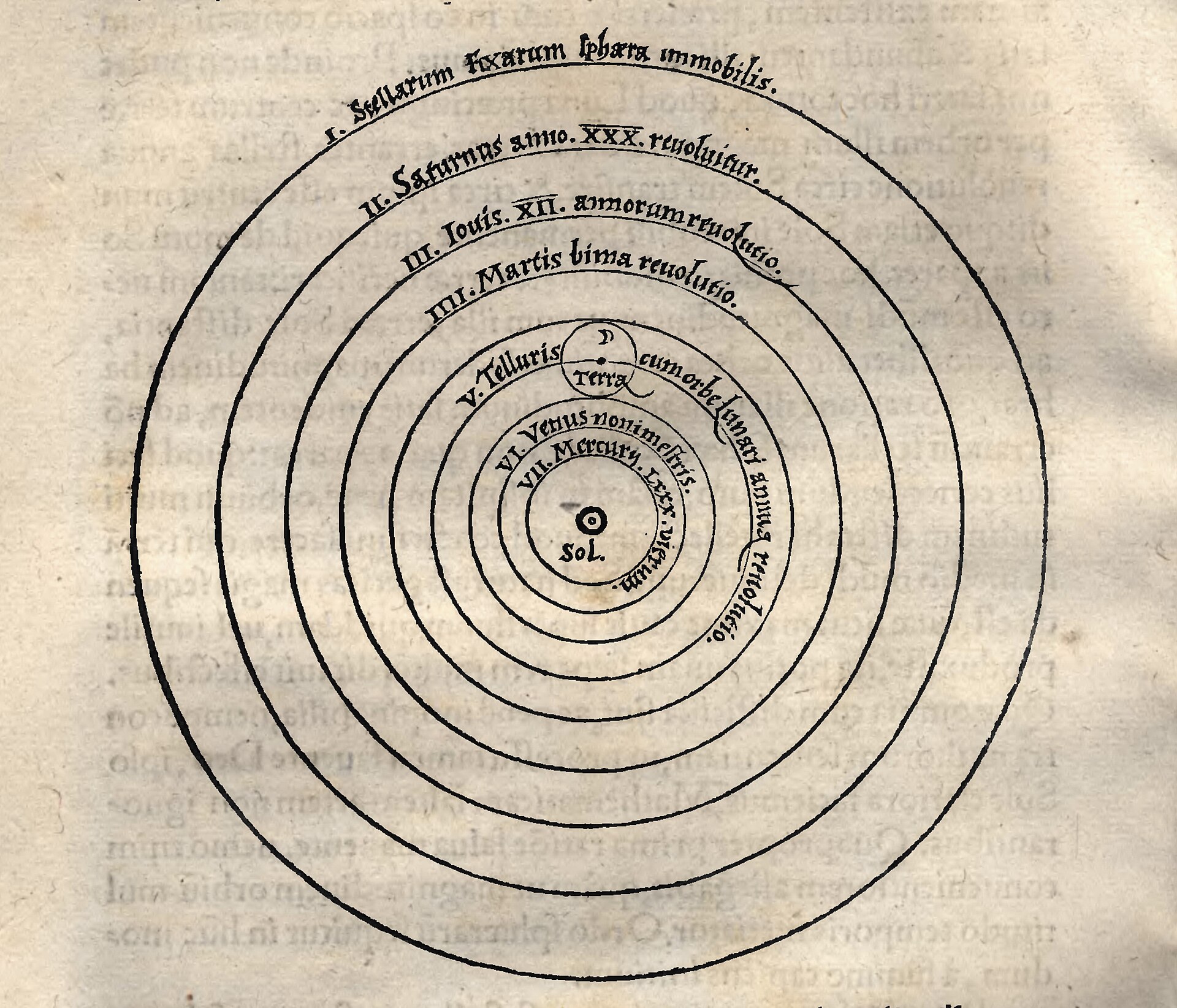
The order of the heavens, from Nicolaus Copernicus,
De revolutionibus orbium coelestium, Nuremberg 1543
For two thousand years the learned have placed our Earth, motionless, at the centre of all things, and made the Sun, the planets and the fixed stars wheel about it each day. To save the appearances they piled circle upon circle until the heavens resembled a clockmaker’s nightmare.
The canon Copernicus proposed a simpler order: the Sun at rest in the middle, and around it, in their courses, Mercury, Venus, our Earth with its Moon, Mars, Jupiter and Saturn. Since I turned my spyglass upon the sky in the autumn of 1609, every new thing I have seen agrees with him, and not with the ancients.
“I hold that the Sun rests at the centre, that our Earth turns upon itself once each day and travels about the Sun once each year – and my telescope has turned this from an opinion into an observation.”
G.G. · Letters on the Solar Spots, Rome 1613
I
Four moons circle Jupiter
Seen January 1610. If four stars go round Jupiter, then plainly not everything in the heavens goes round the Earth.
II
Venus wears phases like the Moon
Seen autumn 1610: full, half and horned. This can only be if Venus goes round the Sun.
III
The Sun has spots – and turns
Followed day by day in 1612. The heavens are not perfect and changeless, and the Sun spins upon itself.
IV
The Moon has mountains
Seen in 1609. The heavenly bodies are made of stuff much like our own Earth – so why should the Earth not wander among them?
The old system · Ptolemy
The Earth fixed at the centre. Sun, Moon, planets and the sphere of stars all whirling about it every day, with epicycles upon epicycles to explain why the planets sometimes walk backwards.
The true system · Copernicus
The Sun at rest in the middle. Around it in order: Mercury, Venus, the Earth with its Moon, Mars, Jupiter with its four Medicean Stars, and slow Saturn. Backward wanderings explained at a stroke – we simply overtake the outer planets.
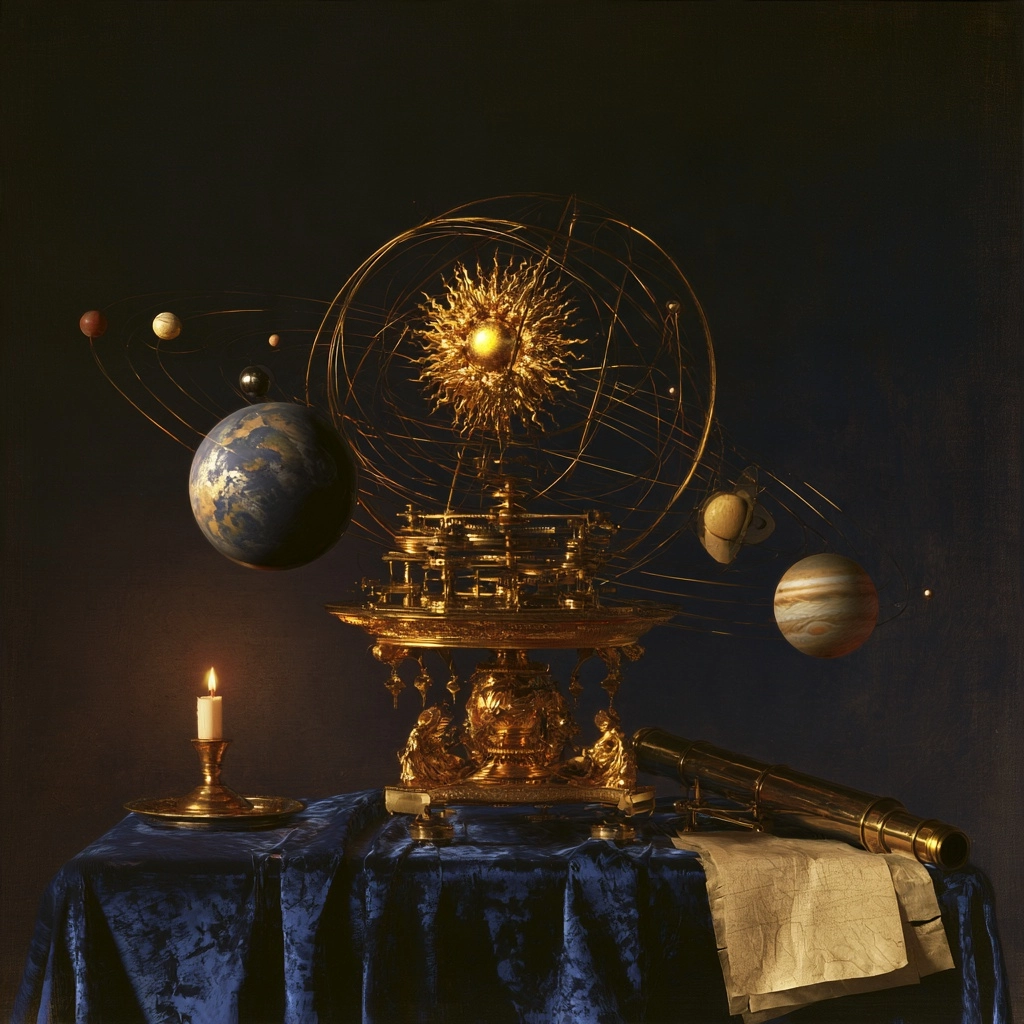
Caput II · Sidereus Nuncius
What my telescope has shown
In March of 1610 I published The Starry Messenger, recounting sights no mortal had seen before. Here are pages from my own notebooks – not copies, not engravings by another hand, but the drawings I made at the eyepiece.
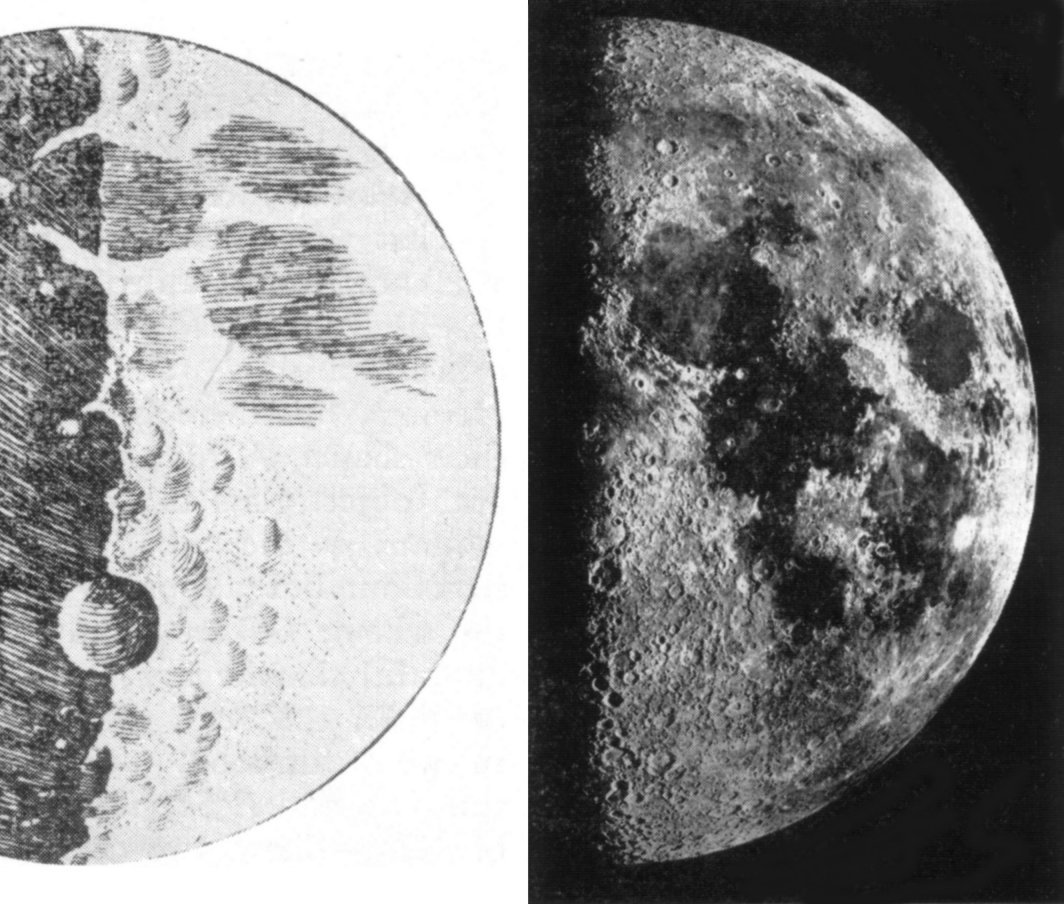
Padua · 1609
The Moon is rugged
Not a polished crystal sphere but a world of mountains and valleys, their shadows lengthening as the Sun sets upon them.
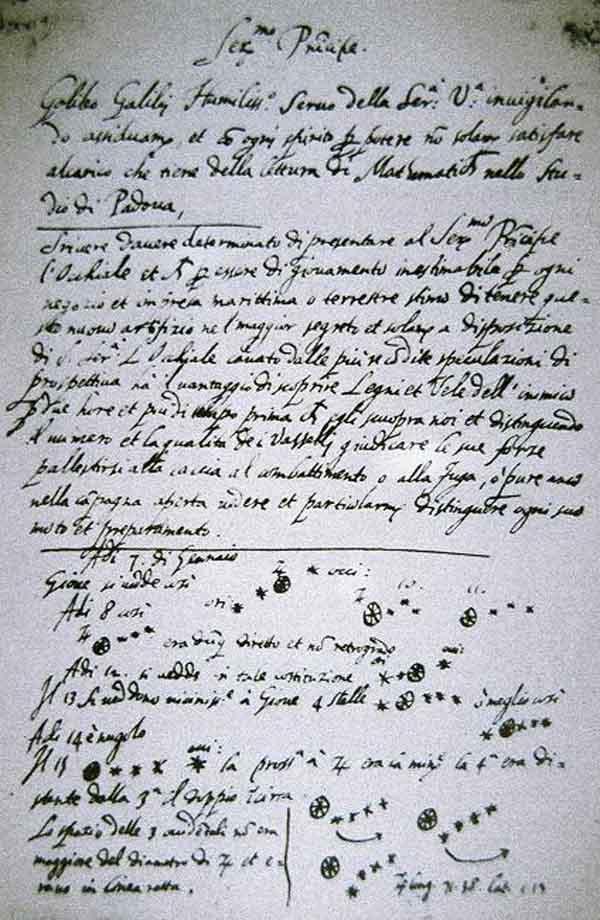
Padua · January 1610
The Medicean Stars
Four little stars that dance about Jupiter night after night. I named them for the House of Medici – and they have served me well.
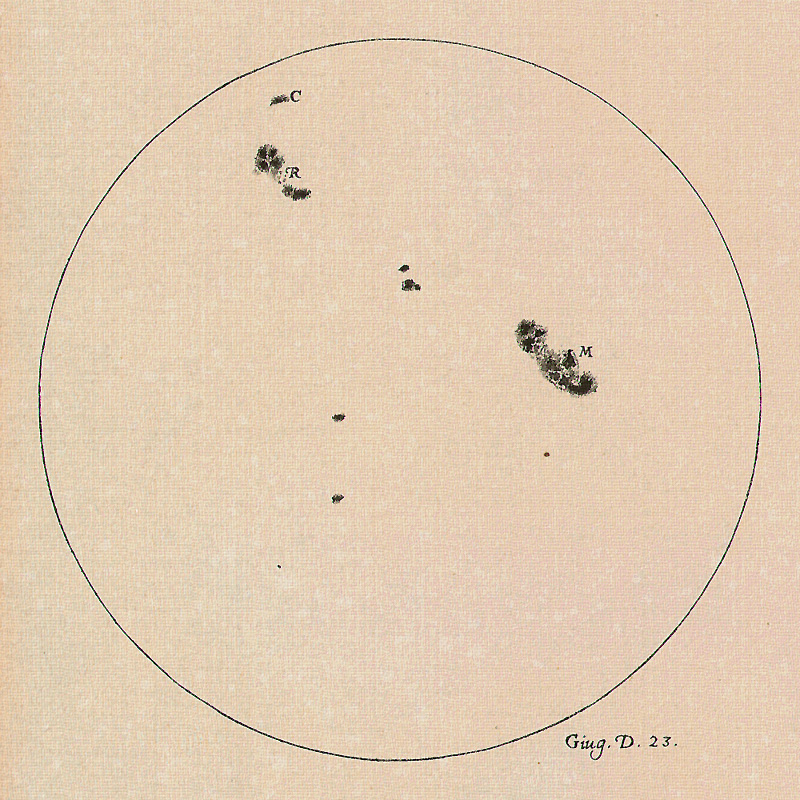
Villa delle Selve · 1612
Spots upon the Sun
Projected safely onto paper and drawn each day: dark spots that travel across the face of the Sun as it turns. Published this very year.
Also observed: the Milky Way is a multitude of stars · Saturn appears three-bodied · Venus waxes and wanes
Caput III · Inventa et Machinae
Inventions & innovations
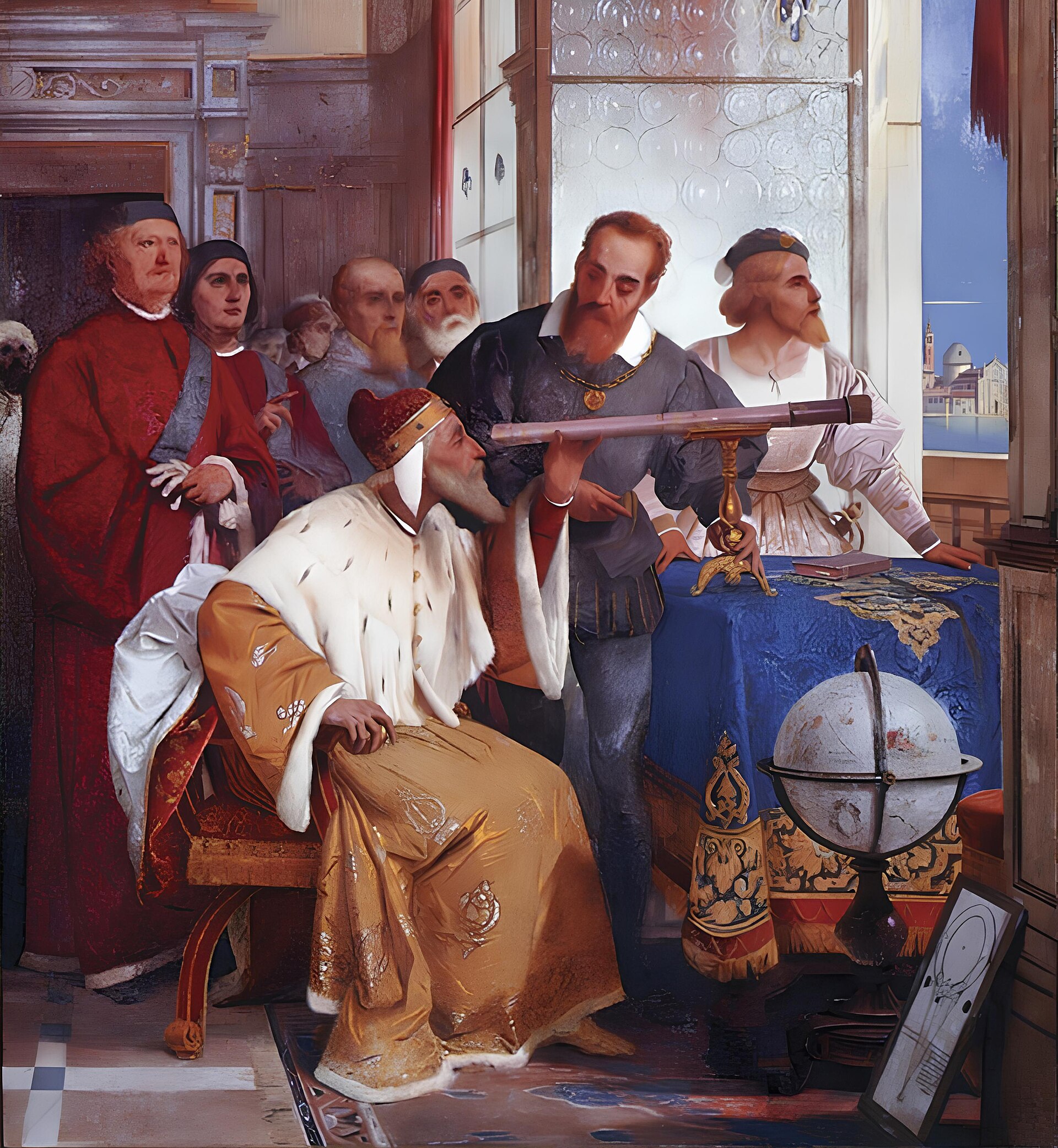
Demonstrating the telescope to the Doge of Venice – as later imagined in fresco by Giuseppe Bertini
Venice · August 1609
The perfected telescope
In the summer of 1609 I heard of a Dutch spyglass that made distant things seem near. Having reasoned out its principle, I ground my own lenses, and on the 21st of August I led the gentlemen of the Venetian Senate up the bell tower of San Marco to watch ships at sea two hours before any eye could find them. The Senate doubled my salary. My instruments now magnify twenty times.
Padua · 1597
The geometric & military compass
A brass instrument of two hinged arms engraved with my scales, by which a gunner sets the elevation of his piece, a surveyor measures a field from afar and a merchant converts one currency into another – all without a page of arithmetic. Described in my printed manual of 1606 and sold, with lessons, to princes from Mantua to Bohemia.
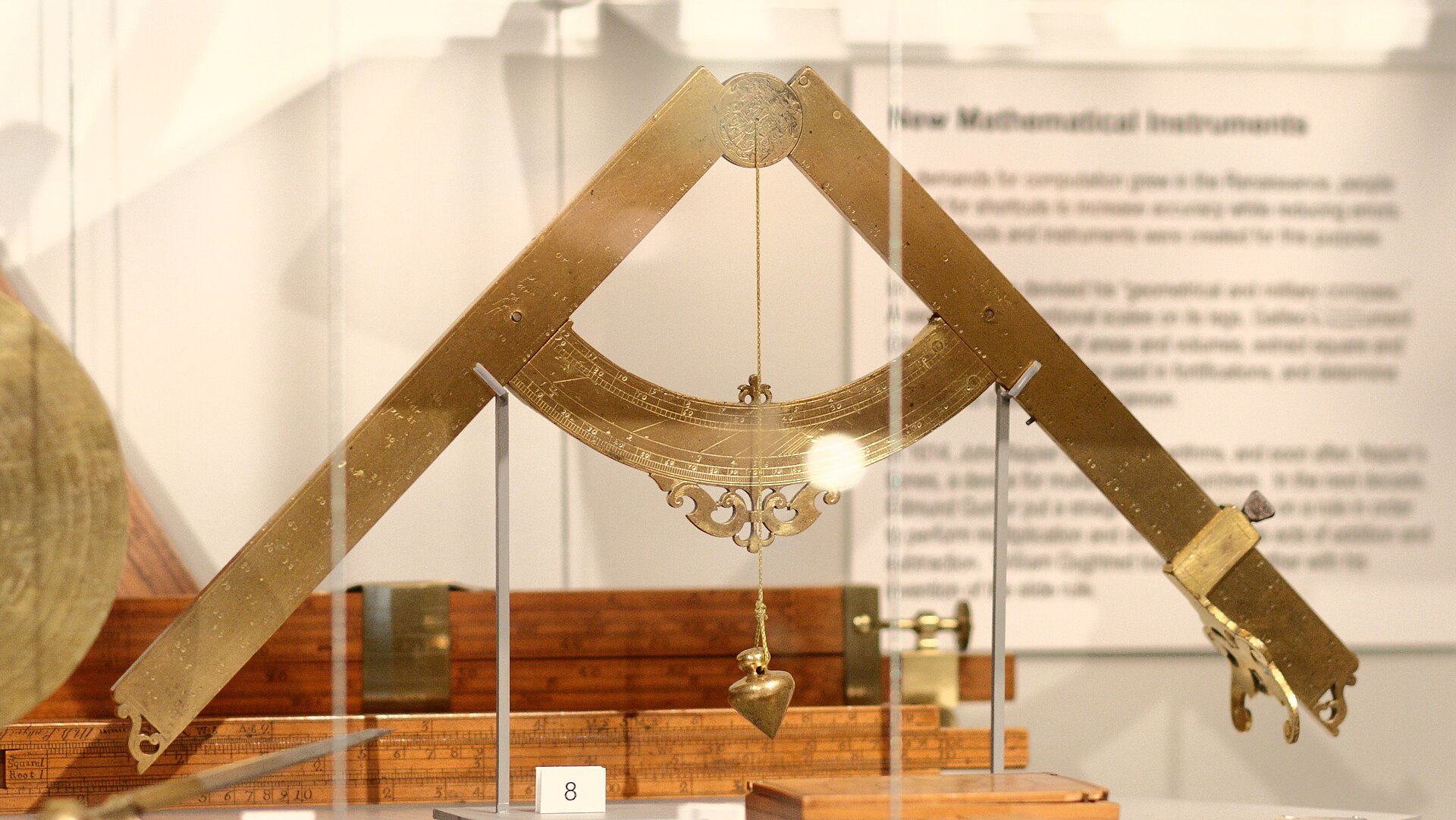
An original compass of my design (photograph: Sage Ross, CC BY-SA 3.0)
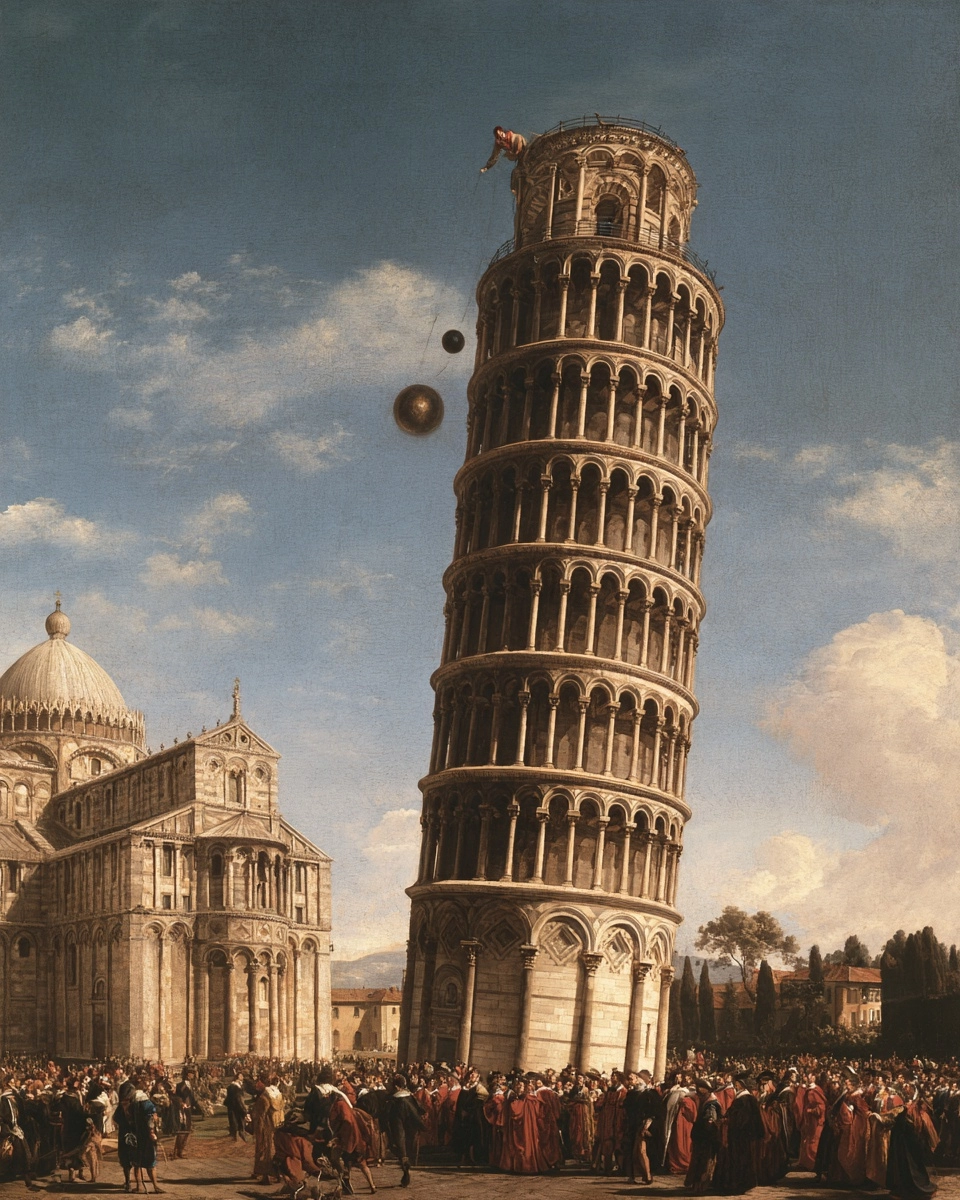
Heavy and light fall together
Aristotle says the heavier body falls faster. It does not. Drop two balls of iron, great and small, and hear them strike the ground as one.
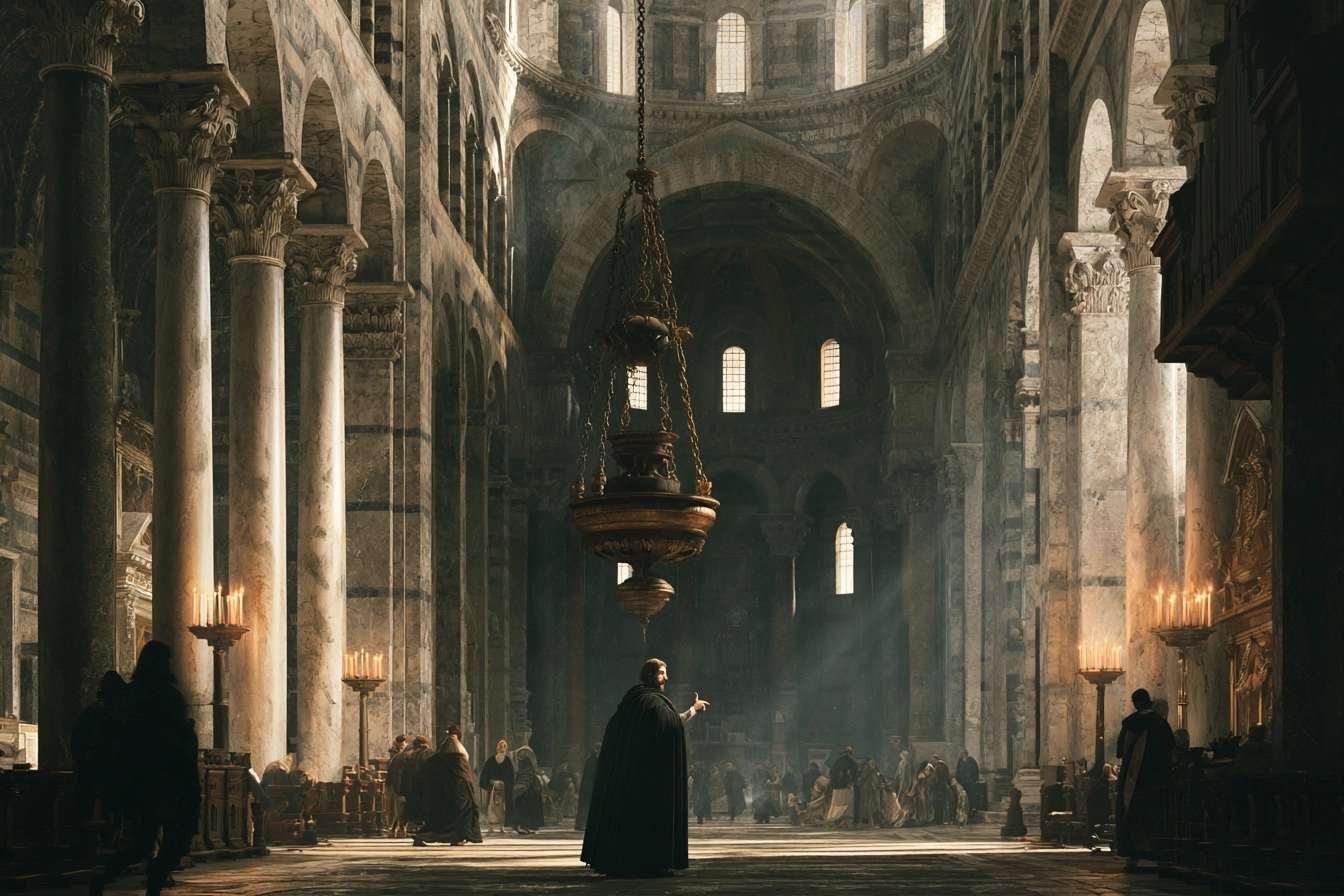
The pendulum keeps time
As a student in Pisa cathedral I timed a swinging lamp against my pulse: wide swing or narrow, each beat took the same time. A clock waiting to be built.
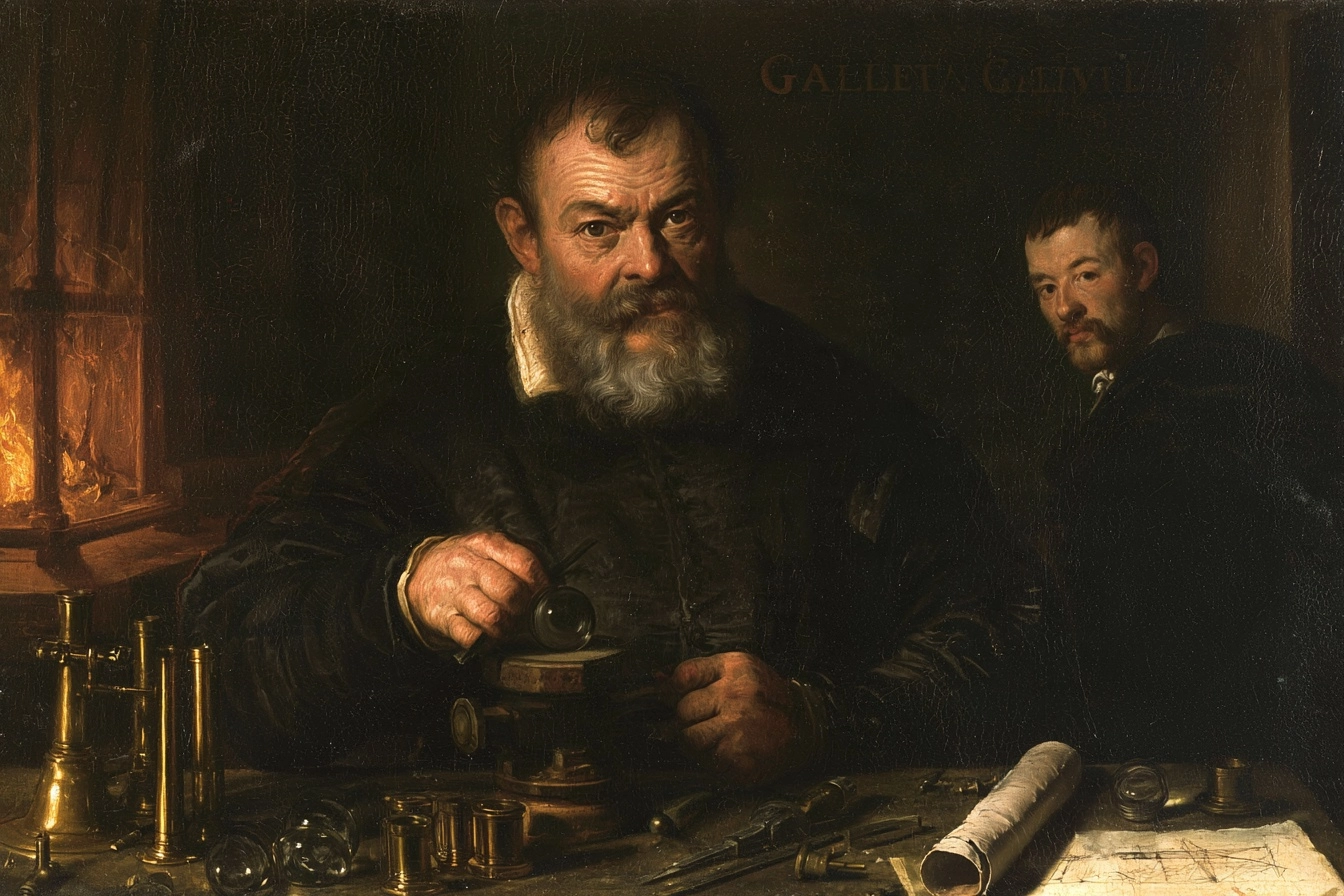
Lenses by my own hand
Of every hundred lenses I grind, perhaps ten are worthy of the heavens. Those ten are the ones I sell.
1586
La Bilancetta
A little hydrostatic balance to tell true gold from false, after Archimedes.
c. 1593
The thermoscope
A glass bulb and a column of water that rises and falls with heat and cold.
1594
A machine for raising water
Worked by a single horse, protected by patent of the Venetian Senate.
1612
A clock in the sky
Tables of the Medicean Stars by which a ship may find its longitude. Offered to the King of Spain.
Caput IV · Ad Conducendum
A philosopher for hire
Though bound first to His Serene Highness the Grand Duke, I accept commissions from noble houses, republics, academies and curious gentlemen – in Tuscany, the Venetian lands and the Papal States, travel by arrangement.
Telescopes made to order
Twenty-power instruments of my own grinding, in tubes of leather and gilt. Delivered with a lesson in their use.
From 30 scudi
Private instruction
Mathematics, mechanics, fortification and the use of the sphere. Board and lodging for young noblemen at my house.
By the season
Compasses with manual
The geometric and military compass in brass, with my printed manual and one hour of instruction.
8 scudi
Engineering counsel
Raising water, mills, the oars of galleys and the strength of beams – as I once advised the Arsenal of Venice.
By the day
An evening of wonders
For your court or garden: Jupiter’s moons, the mountains of the Moon and the horns of Venus, with telescopes for every guest.
Most requested
Nativities & almanacs
Horoscopes cast for patrons who still enjoy them. The planets, I assure you, are none the worse for being consulted.
Upon request
Fees in Florentine scudi or Venetian ducats, half on commission and half on delivery. Commissions from the Most Serene Republic are especially welcome – I remember my eighteen years at Padua with great fondness.
Caput V · Testimonia
From the letters of my patrons
“Signor Galilei’s spyglass showed me my husband’s galleys rounding the cape two full hours before the harbour bell. I have ordered three more – one for my husband, and two to keep an eye on him.”
Ortensia, Marchesa di Valfiorita · Livorno
“With his compass our engineers laid out the new bastions in a fortnight. The previous engineer had taken a year, and is now, I believe, a contented farmer.”
Count Ottavio Bellamonte · Lord of Montecastro
“He taught my nephews more geometry in one Paduan winter than their tutors managed in four. They now correct me at dinner, which I count as progress.”
Anselm, Prince-Bishop of Hohenwald
“His evening of wonders in our garden: forty guests, four moons of Jupiter, and not one soul spoke of anything else until Lent.”
Doña Leonor de Alcázar, Duchess of Valdeluna
Further references gladly furnished upon request, under seal.
Caput VI · Invitatio
You are cordially invited
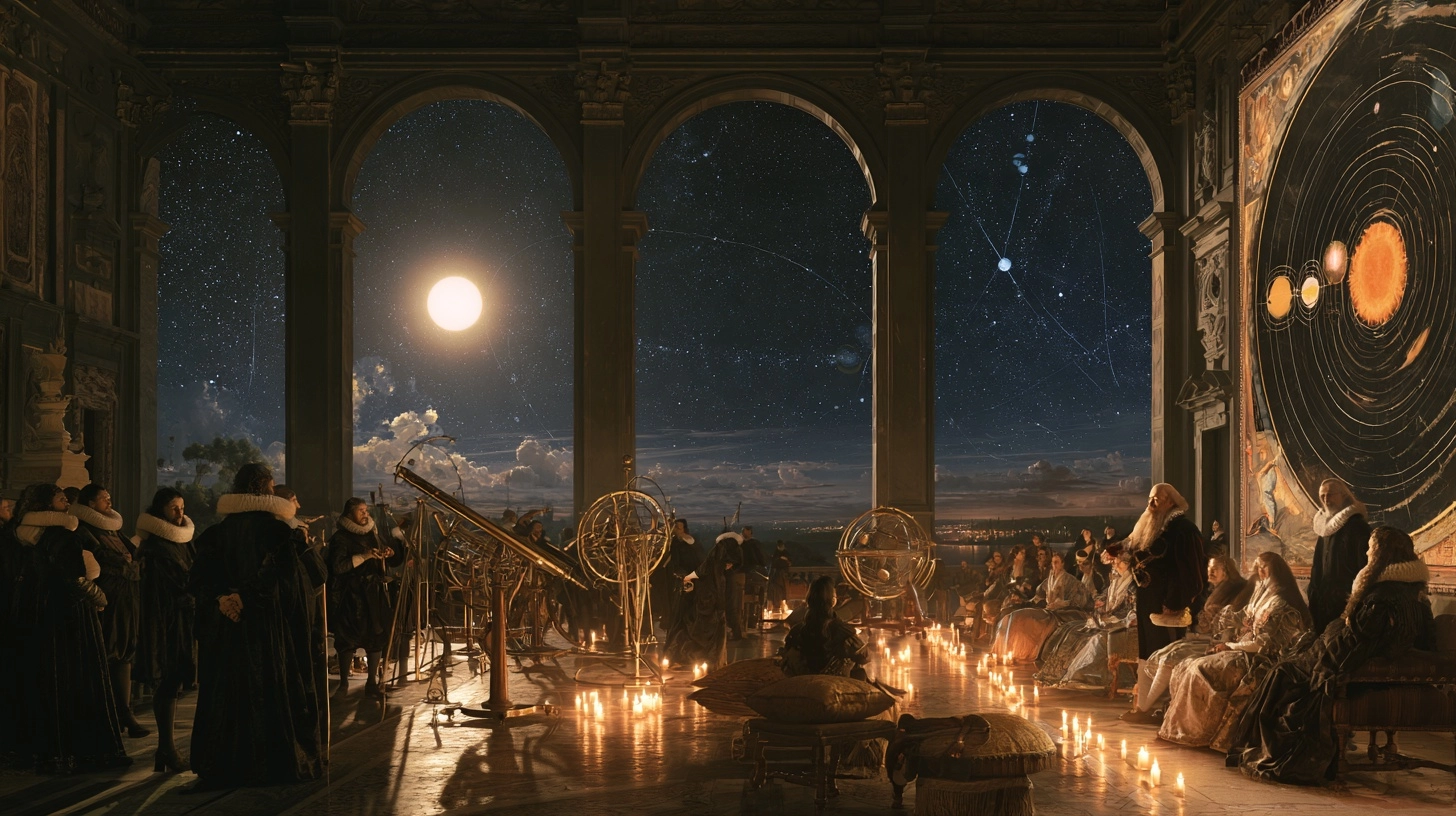
The First Grand Assembly of Astronomers & Natural Philosophers
Signor Galileo Galilei will present
On the Motion of the Earth and the Stillness of the Sun
with demonstrations by telescope upon the terrace, the heavens permitting
Thursday, the 5th of December, 1613
at the first hour after sunset
The Great Hall of the Palazzo Pitti, Florence, by gracious leave of His Serene Highness Cosimo II de’ Medici, Grand Duke of Tuscany
Order of the evening
First hour · Sweet wine and candied fruits
Second hour · The lecture, with diagrams
Third hour · Jupiter and its four Medicean Stars, by telescope in the Boboli Garden
Expected in attendance
Prince Federico Cesi, founder of the Lincean Academy · Father Benedetto Castelli of Pisa · Signor Johannes Kepler, Imperial Mathematician (by letter, should the Alpine passes close) · the ambassadors of Venice and Spain · the Marchesa di Valfiorita · Count Bellamonte · and the mysterious Apelles of Augsburg, author of three letters on the solar spots – should he dare to remove his mask
Forty seats only. Kindly reply by letter before the Feast of Saint Andrew, the 30th of November.
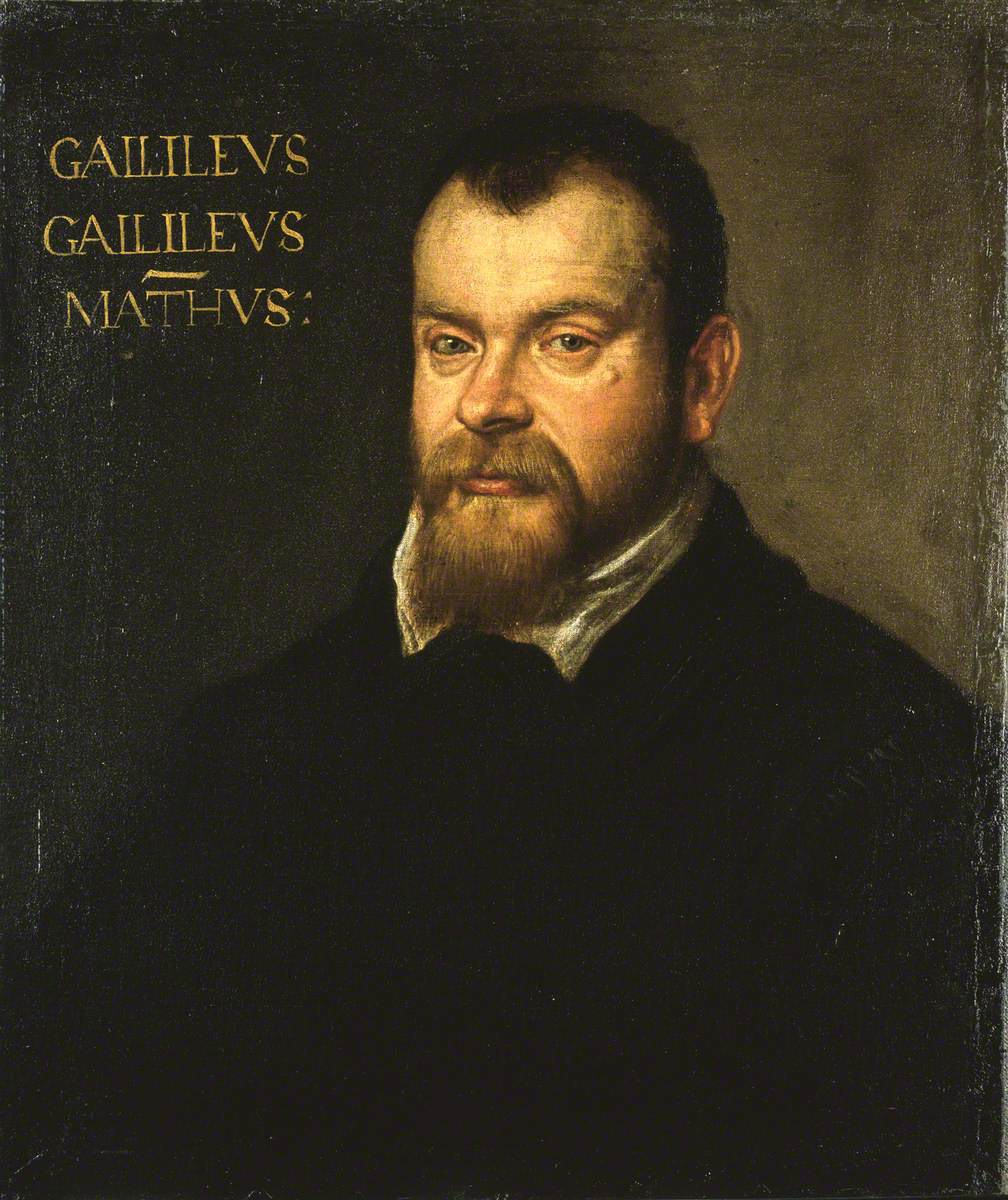
My likeness, painted in Padua c. 1605, attributed to Francesco Apollodoro
Caput VII · Epistulae
Write to me
Born in Pisa on the 15th of February 1564. Professor of mathematics at Pisa and then for eighteen happy years at Padua; since 1610 Chief Mathematician of the University of Pisa and Philosopher to the Grand Duke; member of the Lincean Academy of Rome since 1611.
By letter
Galileo Galilei
at the Villa delle Selve
Signa, near Florence
By courier
The Grand Ducal post departs Florence on Mondays and Thursdays. Letters from Venice reach me in four days, from Rome in five.
In person
At the Palazzo Pitti on court days – ask for the Philosopher of the Grand Duke.
Observing hours
Clear nights from dusk until the small hours. Do not expect replies on cloudy days – I shall be sulking.